The New Zealand Pavilion was grounded in the ethos of Te Awa Tupua and supported by Whanganui iwi. The pavilion positioned the river as both metaphor and message – a living system whose wellbeing is inseparable from our own. Through immersive storytelling, sound, and visual composition, visitors encountered Aotearoa as part of a global, interconnected ecosystem.
Te Awa Tupua formed the philosophical and ethical foundation of the pavilion. Its 2017 legal recognition as a living entity provided not only a compelling narrative but an authoritative model of tiakitanga in practice. Tupua te Kawa offered both the ethical case and credible authorship for the concept, demonstrating how indigenous values could structure meaningful action. ‘I am the river, the river is me’ – the axiom of Whanganui iwi – articulated the inseparable relationship between people and the natural world. This direction positioned Aotearoa as a nation where innovation was inseparable from care and where solutions were developed for the collective good of people, place, and planet.
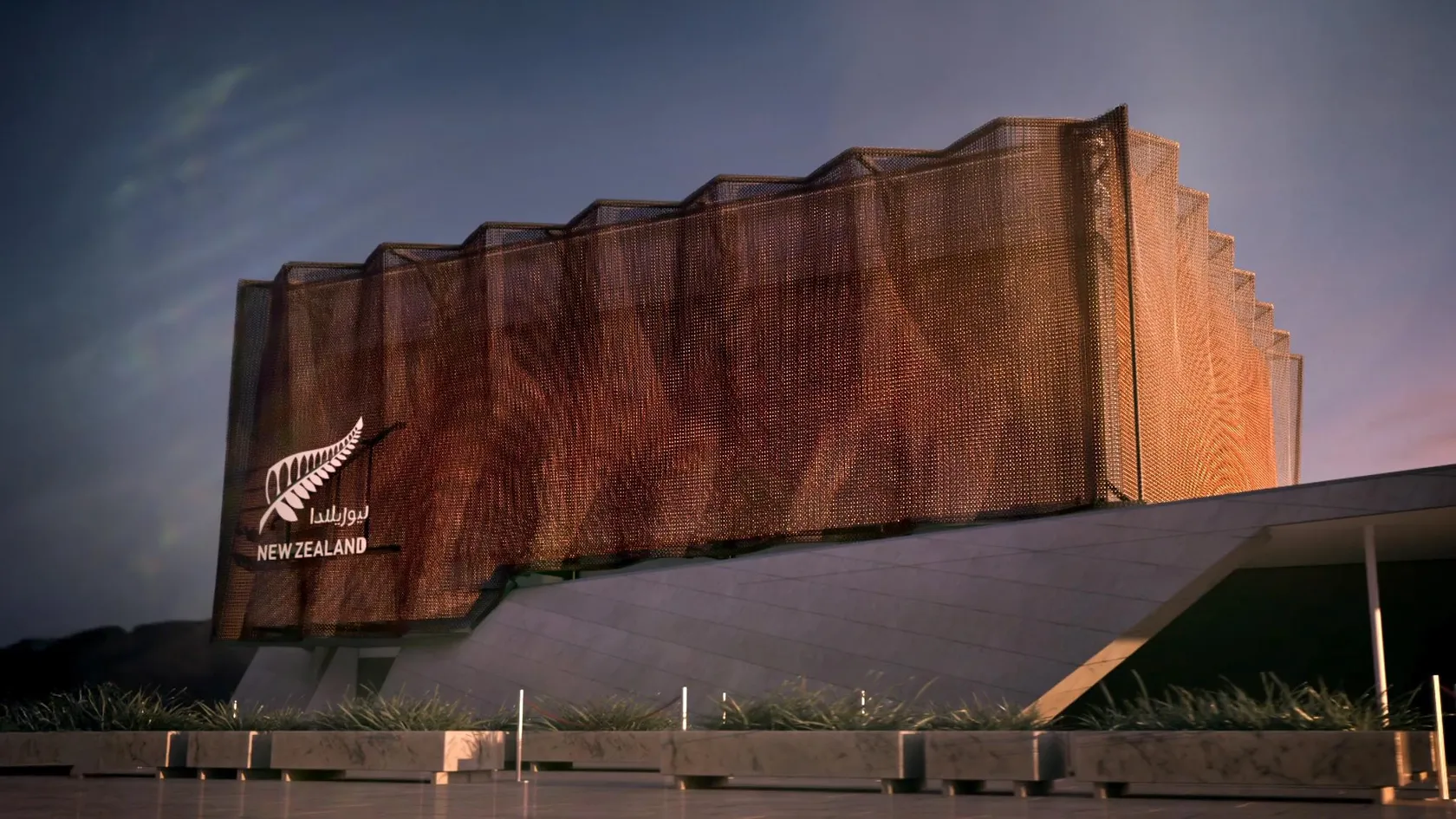
The experiential design was structured around te hā o te awa, a conceptual, visual, and audible pulse derived from the vitality of Te Awa Tupua. This pulse shaped a rhythmic journey through compression and release, darkness and illumination, intimacy and expanse. Each space responded to it, culminating in the undulating facade of the building.
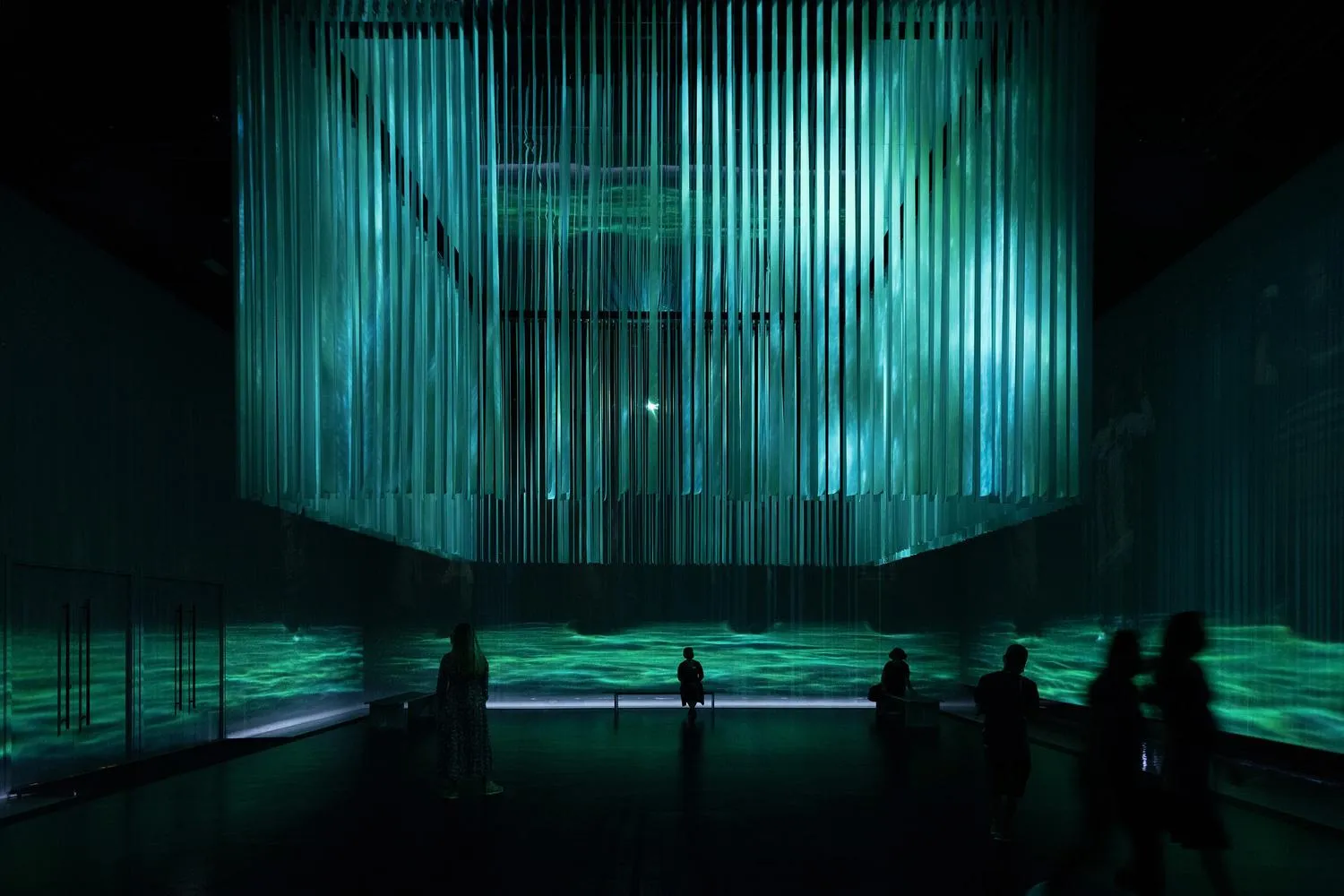
Haumi led the creative direction of the New Zealand Pavilion along with a network of exceptional creative partners. Specialists across design, film, sound, digital craft, and fabrication contributed to the conceptual integrity of the pavilion. Jasmax set the course for the kaupapa, providing the spatial foundation for the experience. The narrative fidelity and cultural authority of the pavilion were made possible through the partnership and leadership of Whanganui iwi, supported by the New Zealand Government and the leadership of New Zealand Trade and Enterprise Te Taurapa Tūhono.
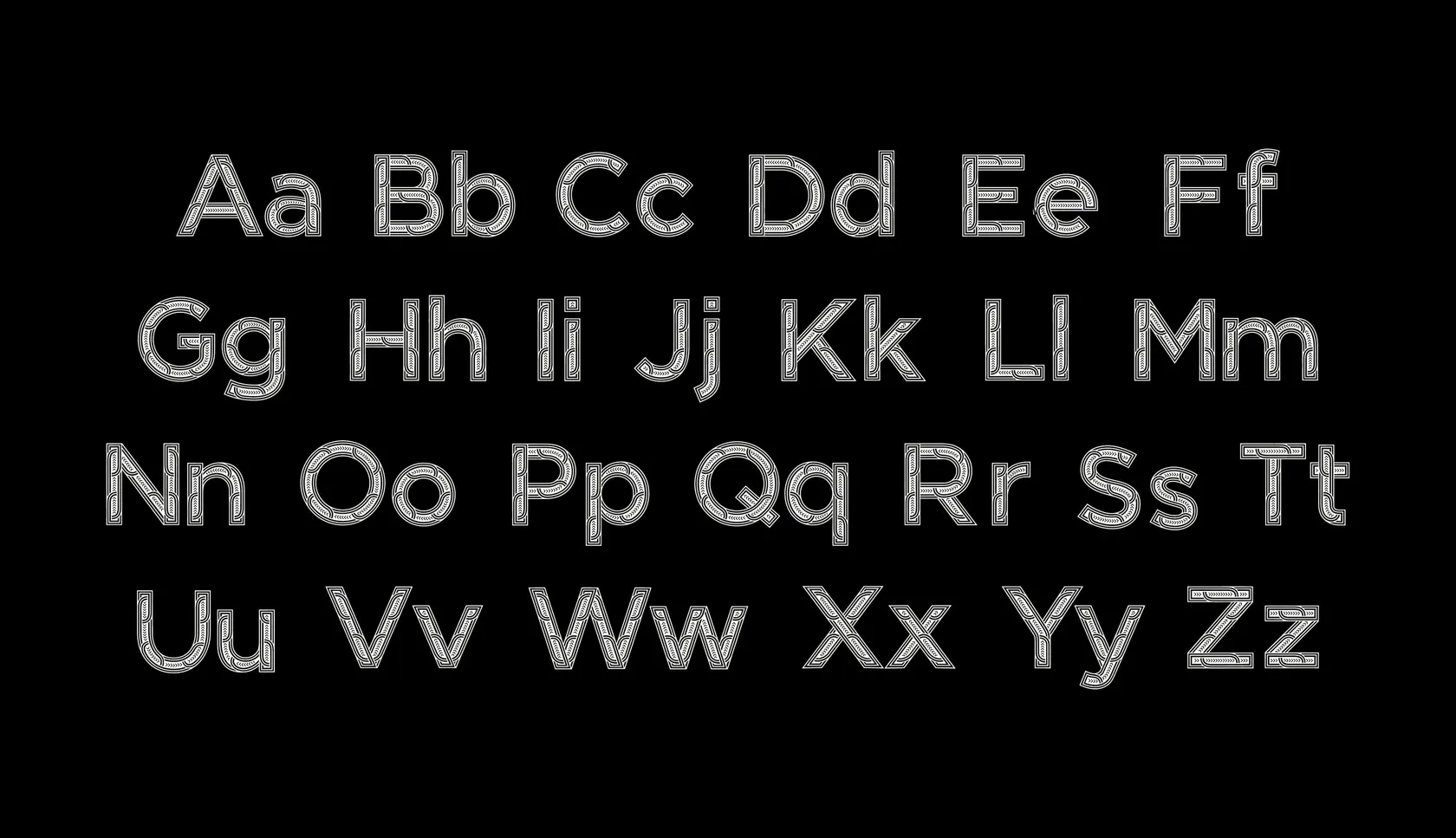
Custom Typeface
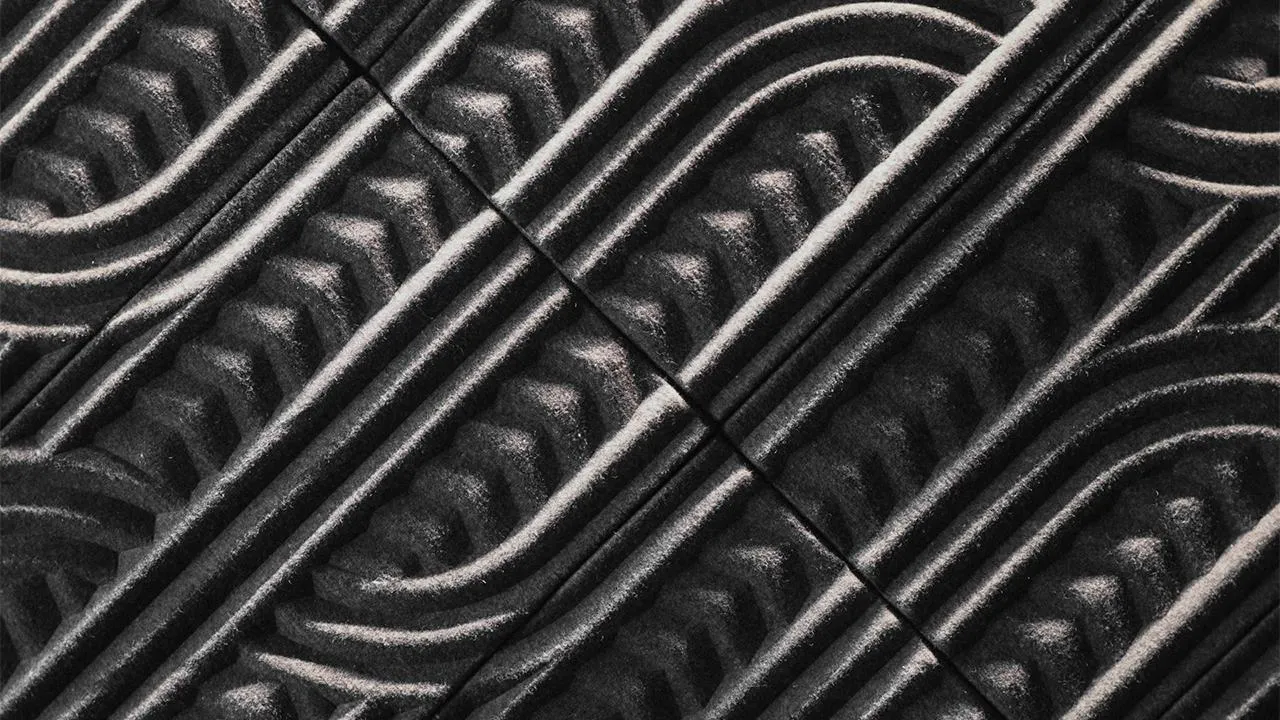
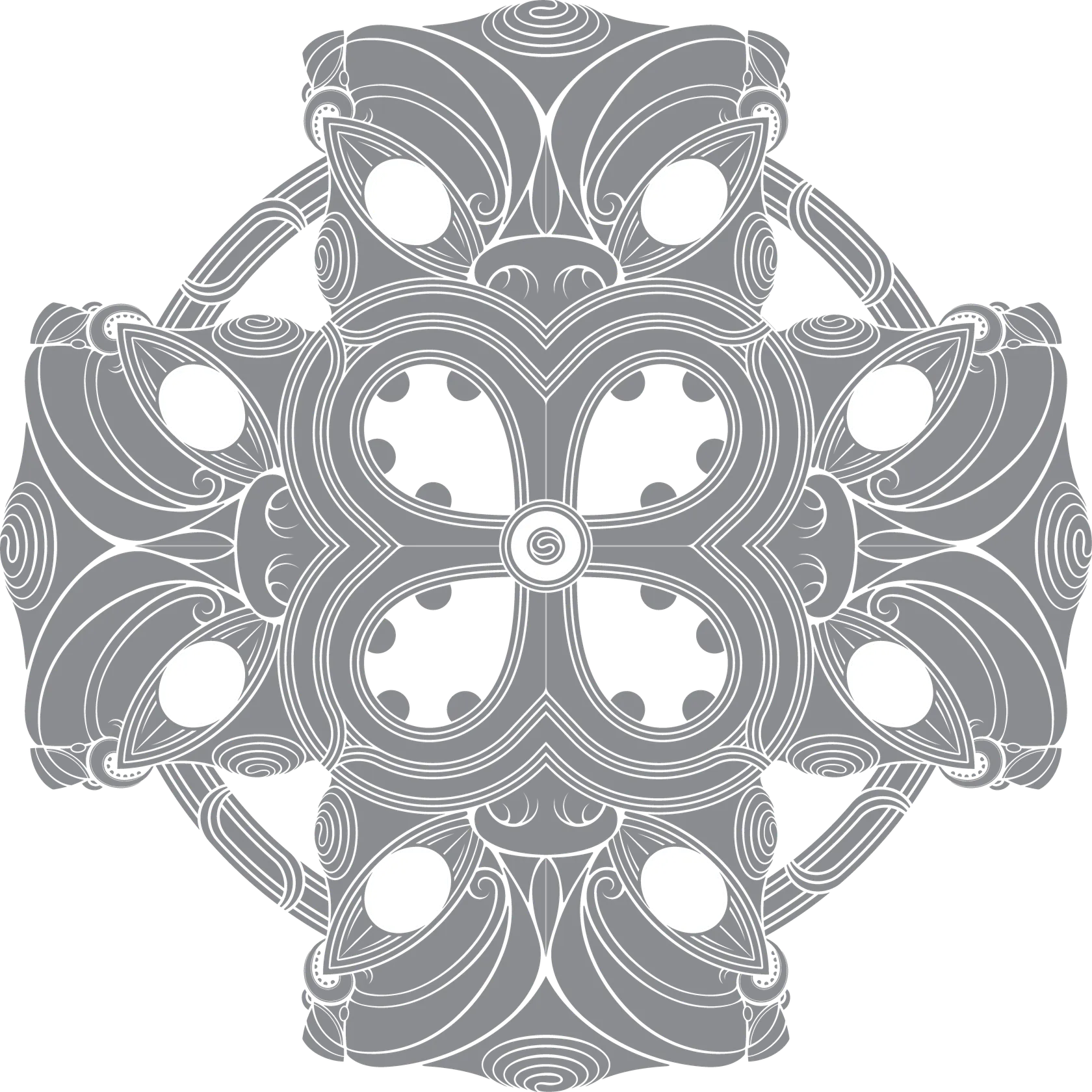
The Rauponga typeface draws from the pavilion’s language of protection and vitality. Inspired by the ponga frond at its most expressive, its form evokes the function of ribs safeguarding the vital organs of a person. The pakati, or chevron pattern, symbolises living energy, reinforcing the animate nature of the Whanganui River.
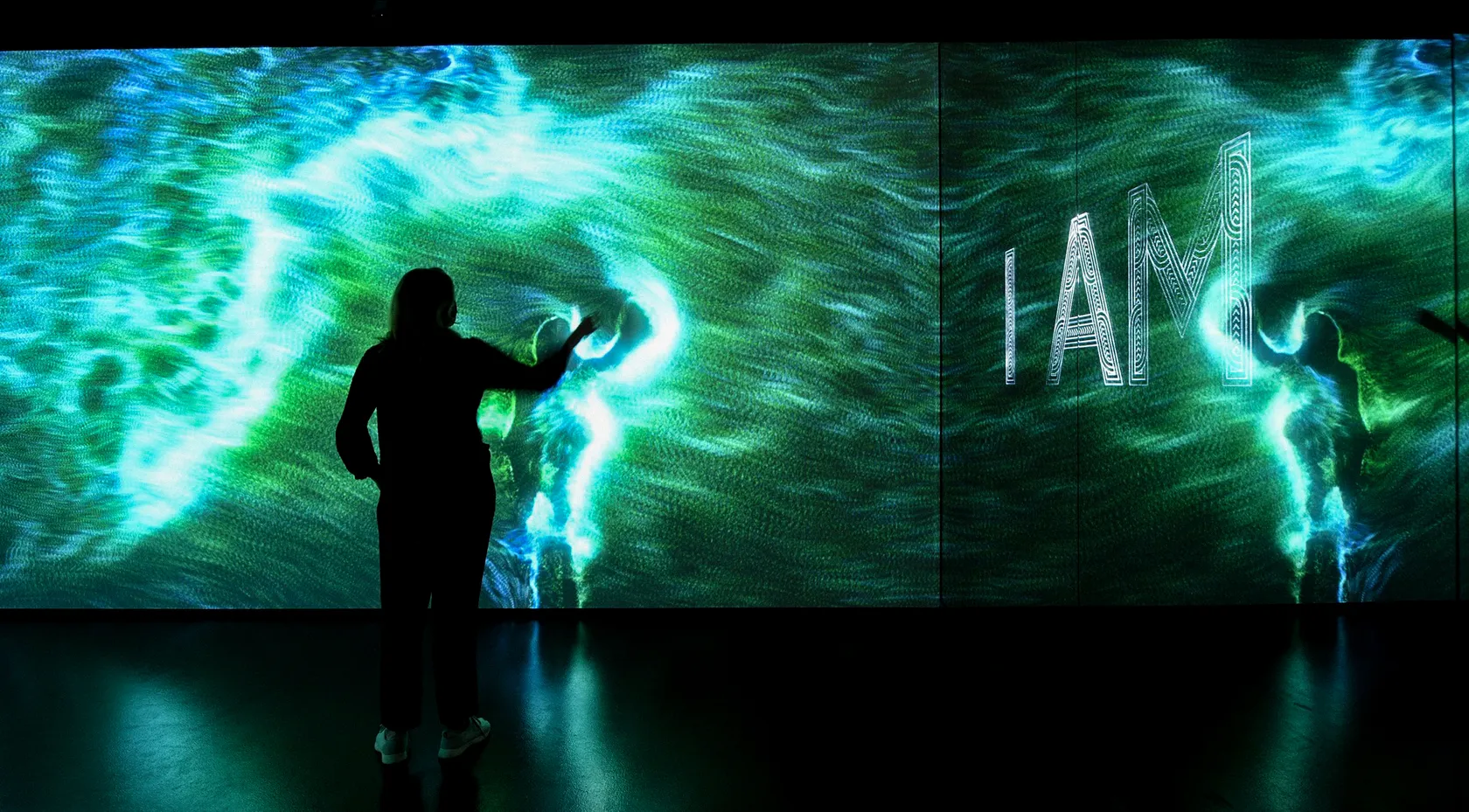
The ‘I AM’ device
Perceptual Engineering
The ‘I AM’ device is derived from in the Whanganui axiom ‘I am the river, the river is me’. It shaped the pavilion’s language and held strong typographic presence, both static and animated, reinforcing the notion that identity emerges through relationship.
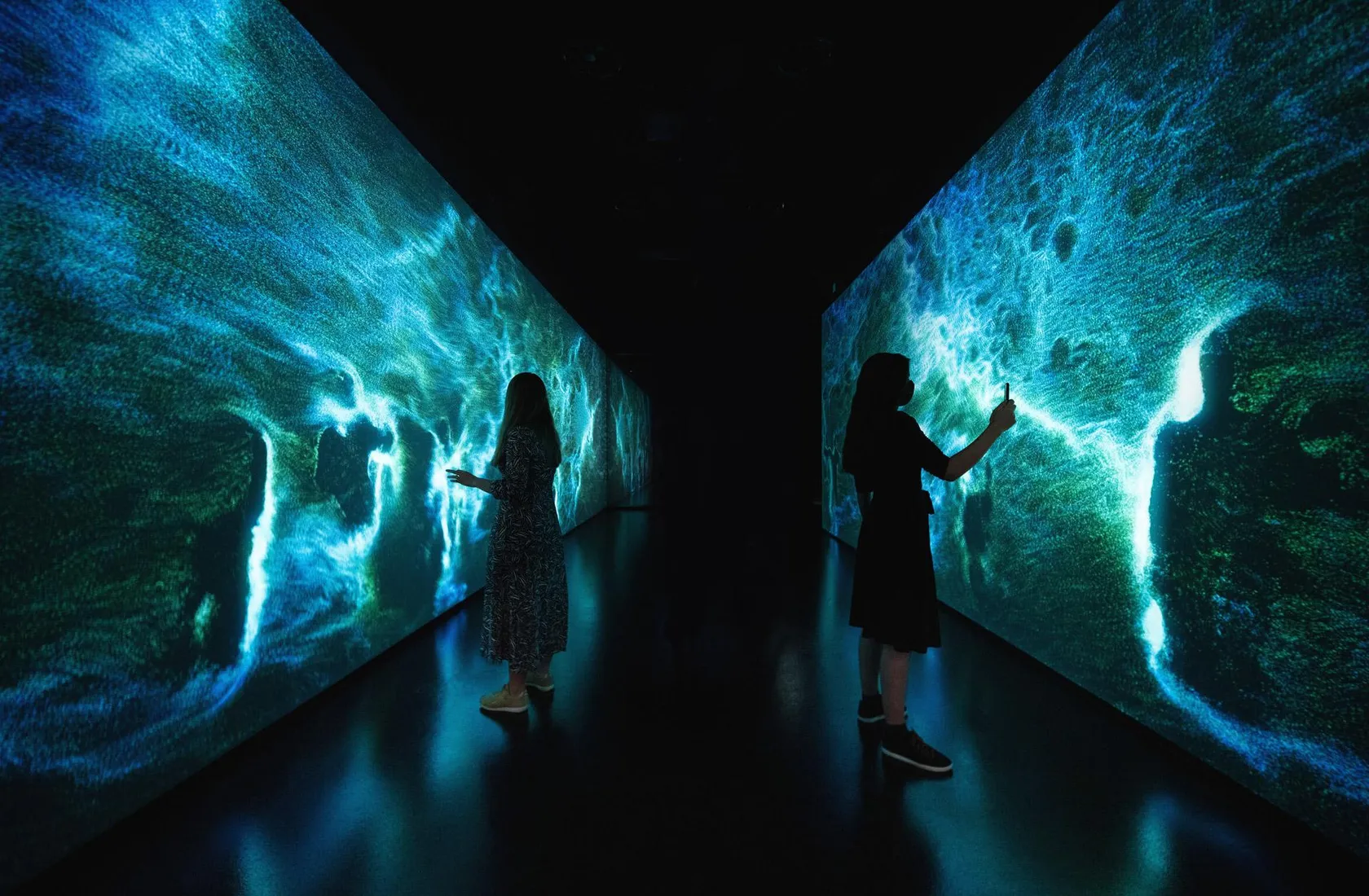
Particle Treatment
Perceptual Engineering
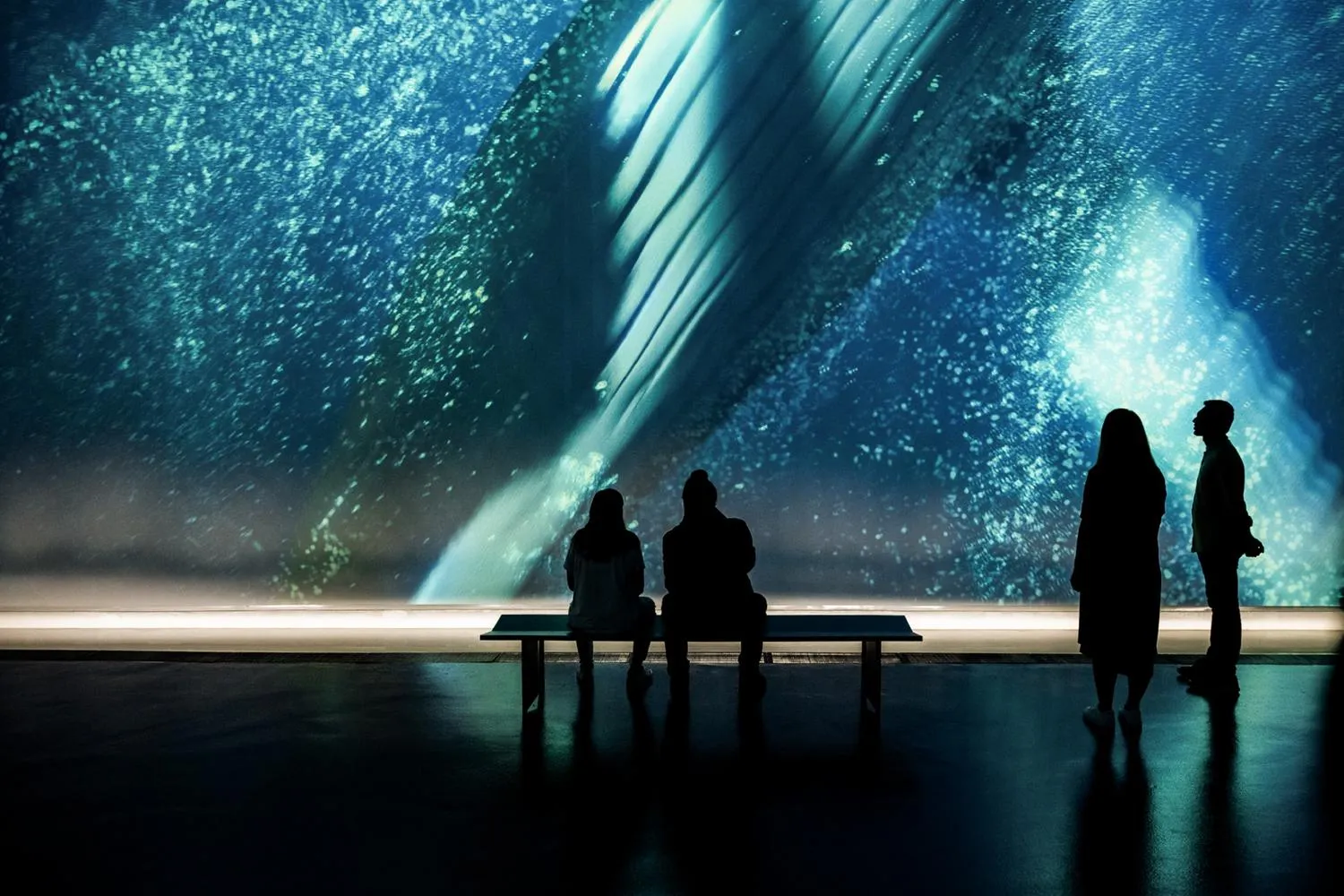
The particle technique underscored the logic of ‘I AM’: the idea that a single particle, pixel, or drop of water can unite with others to become an ocean. Beyond its conceptual resonance, the treatment created an emotive, fluid force that, when paired with sound, intensified the sense of immersion and reinforced the pavilion’s central message of interconnectedness.