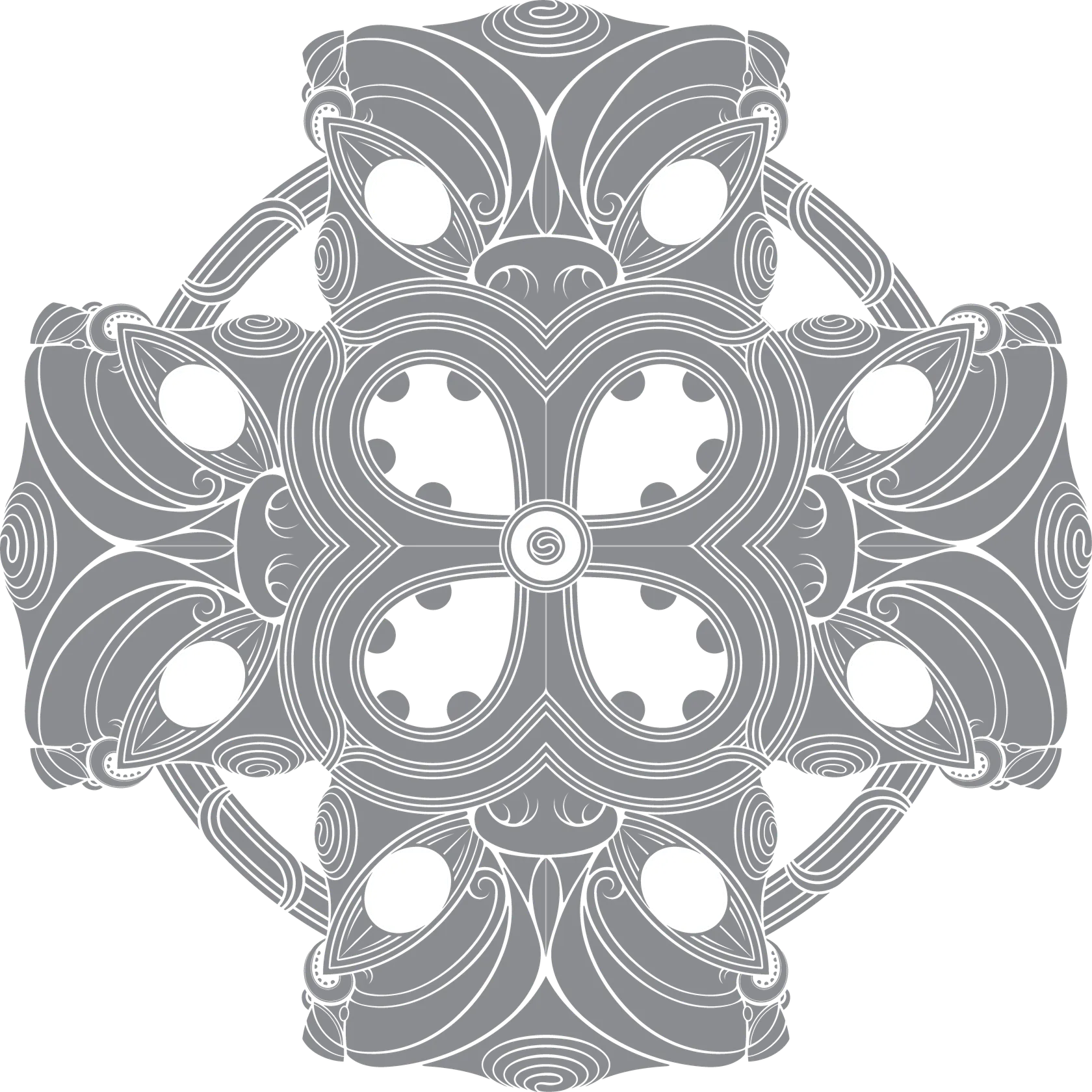
Te Tūturutanga o te Whakaaro is a framework for cultural orientation – an approach grounded in whakaaro Māori that supports dimensional, kaupapa-led ways of working. It is a structured, deliberate process designed to bring clarity to complexity, identifying what matters, aligning intent, and enabling momentum. It creates space for insight to emerge through careful observation, relational depth, and contextual precision, ensuring that decisions are grounded, informed, and purposeful.
Each phase, while distinct, forms part of an interconnected system. Together, they guide us from context to concept, and from potential to realisation, ensuring that what we generate has cultural integrity, functional strength, and enduring relevance.
Te Roro refers to the open threshold of the whare – an architectural gesture that orients the building to its environment. As a phase in our process, Te Roro represents the act of arriving. It is where we pause, observe, and begin to understand the forces that shape a kaupapa – its landscape, history, people, tensions, and aspirations.
This stage involves intensive listening, research, and analysis. It is about discerning what matters, what has been said, what remains unsaid, and where the space for contribution lies. Te Roro lays the groundwork for defining the iho, the unifying idea that gives shape and direction to everything that follows.
Te Awarua speaks to the inherent dualities that define existence: tapu and noa, light and darkness, conflict and peace. This phase reminds us that clarity does not arise from uniformity, but through the ability to hold and interpret dynamic perspectives, each shaped by context, relationship, and time.
In Te Awarua, we test what we think we know. We explore the layered relationships, tensions, and subtle dimensions that may otherwise remain unexamined. It is a space of challenge and recalibration, where complexity is not an obstacle but a condition of depth. Here, potential is not revealed through simplification, but through the ability to recognise coherence within complexity, and to move forward with considered intent. This phase celebrates nuance not as ambiguity, but as a refined form of understanding that enables more precise, resilient, and context-aware outcomes.
Ruawhetū marks the phase where insight begins to crystallise. It is a place of elevation and composition, where knowledge is gathered, organised, and transformed. We harvest what has surfaced, arrange what is known, and begin to articulate form.
This is where patterns clarify, narratives are distilled, and frameworks align with aspiration. The work moves from sensing to structuring, from possibility to proposition.
Ruawhetū is not the end of thought, it is the threshold of expression. Elevated knowledge is grounded: tested, refined, and made coherent. This is where connections settle into alignment, and the kaupapa begins to assert itself through a deliberate and composed direction.
Pūwaha refers to an opening or mouth and is a point of entry, and also, a source of expression. In this phase, we move from idea to form. We give life to the kaupapa through design, storytelling, strategy, or experience. Every expression, whether visual, spatial, digital, or discursive, is shaped by the whakapapa of what has come before.
This is not simply a delivery phase. It is a continuation of the thinking, where clarity becomes tangible, and meaning is carried through the detail. Pūwaha ensures that what is produced is not only functional or crafted, but intimately aligned with intent, context, and responsibility.